Tuesday, October 27, 2015

Dietary Considerations and Rickets


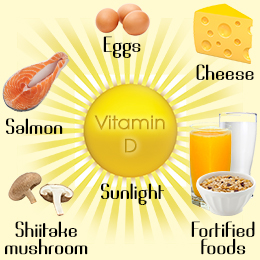
Since rickets is a nutritional disease related to a deficiency of vitamin D, it is important for a person who has rickets to eat foods rich in vitamin D. Foods that contain high amounts of vitamin D include fatty fish, cheese, egg yolks, and other foods fortified with vitamin D. Nowadays, these can include cereal, some dairy products, orange juice, or soy milk.


 It is also recommended that the diet includes the contribution of other vitamins and minerals, such as vitamin C.  These foods can include bell peppers, leafy greens, and other vegetables. Fruits such as kiwis, papayas, and berries also contain high amounts of vitamin C.

Avoiding foods that are high in white sugar is often advised because these foods hold very little benefits, and definitely are not high in vitamin D or C.

Consuming enough vitamin D while pregnant can also be crucial in ensuring that your child will not develop rickets later in life. Make sure to eat a diet rich in vegetables that have not been overcooked, which can cause them to lose some of their nutritional properties. After the baby is born, make sure to include a vitamin D supplement in addition to breast milk. Breast milk on its own does not include the necessary 400 IU of vitamin D that a baby needs daily.

Of course, overall, follow the diet regiment that is advised by a medical professional.

For more information please read

Sunday, October 18, 2015

Rickets Treatment

            Most cases of nutritional rickets are caused by vitamin D and calcium deficiency. So, it’s logical that the treatment for is rickets is to increase a child’s daily intake of vitamin D and calcium. The levels of these nutrients can be increased by including more vitamin D and calcium rich foods in the child’s diet, or having the child take a supplement. Foods that are good sources of vitamin D include fatty fish such as tuna, mackerel, or salmon, cheese, egg yolks, and some types of mushrooms. Additionally, many foods are fortified with vitamin D nowadays, like cereal, milk, or even orange juice. Increasing the amount of these foods in a child's diet will help to lessen and eventually eliminate symptoms of rickets. 
Exposure to sunlight increases vitamin D levels as well, so you may be advised to have your child spend more time outside.
More specifically, treatment for rickets can either be treated over several months or in a single-day dose. If the first method is chosen, a certain amount of vitamin D is given to the child over a course of a few months. The second method is divided into 4 to 6 oral doses in one day.


It’s important to see a doctor to be treated for rickets. They will know how much vitamin D and calcium that your child will need. Too much vitamin D can lead to hypercalcemia (too much calcium in the blood), which can cause nausea, vomiting, and poor appetite. Frequent urination, kidney problems, and weakness may also result from too much vitamin D.
          If severe deformities have occurred because of rickets, orthopedic correction may be required. Correction will normally occur as the child grows, and the symptoms of rickets will disappear. However, if a child goes too long without being treated, lifelong consequences may result. These include spinal deformities and a shorter stature. Thankfully, rickets is easy to identify and cure. Treatment has a very high success rate. 

For more information, please read:
or

Saturday, October 10, 2015

Signs and Symptoms of Rickets

Rickets manifests in several different ways. A baby might seem “floppy”, or floppier than normal. A child may complain of bone tenderness or pain, or they may be resistant to walking or tire easily. Bones affected by rickets break easily, so if a child breaks a lot of bones that could be a sign of rickets. Rachitic rosary, the enlarged ends of ribs that appear beadlike, and Harrizon’s groove, a horizontal line that is seen where the diaphragm attaches to the ribs, and also signs of rickets.
In this image, both rachitic rosary and Harrizon's groove are visible. The bead-like bumps on the baby's chest is rachitic rosary, and the line on his abdomen in Harrizon's groove.
Additionally, hypocalcemia, or low blood calcium levels, can indicate rickets. If the calcium levels are low enough, it may cause muscle cramps, twitching, tingling, or even seizures (though this is rare).  A parent might notice soft spots in a child’s skull that otherwise shouldn’t be there. A child’s wrists and ankles may begin to widen, or there may be other spinal, pelvic, or cranial deformities. The height and weight of a child can also be affected by rickets, the child will be shorter and lighter. Muscle weakness may be a sign of rickets as well. Due to the poor absorption of calcium, dental deformities or delayed dental growth may appear. The enamel on the teeth will be weak, so there is an increased risk for cavities. As I’ve mentioned before, a protruding breast bone, or pigeon chest, and bowed legs are some of the most well-known rickets symptoms. Rickets symptoms and signs are mainly physical, making it fairly easy to identify the need for medical help.

Saturday, October 3, 2015

Rickets Diagnosis

Rickets is diagnosed in a clinical setting by professionals. Initially, a doctor may press gently on the child’s bones to see if they’re soft. In particular, they’ll observe the skull, legs, chest, wrists, and ankles. Children with rickets often have softer skulls, bowed legs, a pigeon chest, and wider and thicker wrists and ankles. A pigeon chest is when the chest begins to flatten causing the breastbone to protrude. 
The physical manifestations of rickets are illustrated here. The pigeon chest, wide joints, bowlegs, and spine deformities are a few prominent features. 

If rickets is suspected, a blood test will be done. This test will measure the levels of calcium and phosphorus in the body. A test may also be done to measure the amount of parathyroid hormone. If the levels of parathyroid hormone are high, that means there isn’t enough calcium in the blood and the body will start taking it from the bones. X-rays of long bones may also be taken. The x-rays and blood tests results are taken into consideration, and if the signs are all there, the child is diagnosed with rickets.
With treatment, rickets is easy to cure. But if it goes untreated, it can lead to long-term skeletal deformities, an abnormally curved spine, or dental defects. It can also poor growth.

For more information on Vitamin D and Rickets, please read: http://patient.info/doctor/vitamin-d-deficiency-including-osteomalacia-and-rickets-pro


Saturday, September 26, 2015

Rickets Pathophysiology

Rickets is a disease that directly results from a lack of Vitamin D and the improper mineral absorption that comes from response to that. If not enough Vitamin D is ingested, calcium and phosphorus cannot be absorbed. These minerals are crucial in the formation and maintenance of healthy and strong bones. Low Vitamin D levels leads to low calcium absorption in the intestines. In order to make up for this, the body will increase levels of Parathyroid Hormone (or PTH) which signals the body to increase levels of calcium. The body will them begin to reabsorb calcium from its own bones.  A disruption in the homeostasis (or equilibrium) of calcium and phosphorus causes poor calcification (or accumulation of calcium) of the cartilage in growing long bones such as the femur. This is what contributes to the bowing of the legs. The bones are weaker and less dense because not enough calcium has been brought together. Thus, it is more likely for the bones to bend.  


These legs are affected by rickets, and display bowed legs.


Additionally, rickets can cause the widening of wrist or the splaying of bones. The bones may be widening in attempt to compensate in size for what they lack in strength. This doesn’t do much to help however, bone stability is not enhanced.

For more information, please read:

http://emedicine.medscape.com/article/985510-overview#a5
                                   or
http://www.uptodate.com/contents/overview-of-rickets-in-children


Sunday, September 20, 2015

Rickets: Epidemiology

While rickets isn’t as prevalent in modern day America compared to older times or even to current day third world countries, it hasn’t been completely eradicated. The Mayo Clinic investigated the records of rickets in a county in Minnesota, and found that 768 children were diagnosed with rickets between the years 1970 and 2009. While this may seem like a small amount of children over a long period of time, remember, this study was just concerned with people in that specific Minnesotan county.  Many people don’t consume enough Vitamin D in their everyday life. Exclusively breastfed babies, premature babies, dark skinned people and people who don’t have much sun exposure are all at risk for Vitamin D deficiency, and in turn, are at risk for rickets.

Breastfeed babies can be deficient in Vitamin D if their mothers didn’t consume enough of the vitamin during pregnancy, or throughout the time they spent breast feeding. As a result, an exclusively breastfeed baby may not be receiving enough Vitamin D through milk alone. Without Vitamin, the baby’s bones can become soft and they become at risk for rickets. Many babies who are born premature can also be at risk for rickets. Their bodies may not have enough Vitamin D, or they may not be able to properly metabolize it. This problem can be solved with additional supplements to the babies diets. During the first few years of life, children’s bones grow rapidly. It is important that their bones have the nutrients they need in order to thrive.

This map demonstrates the Vitamin D deficiency among the general population (blue), and the population of pregnant women (yellow).  


Amongst populations of people with darker skin, Vitamin D deficiency is common. As stated earlier, Vitamin D deficiency and rickets are often interrelated. Because of the darker pigmentation of the skin, it’s more difficult for the body to utilize the Vitamin D it does receive. The same idea applies to people who spend a lot of time inside. Vitamin D cannot be absorbed and used if it doesn’t reach the skin. 

Overall, rickets tends to affect younger children, while all can suffer from Vitamin D deficiency. It's important to be aware of what you're eating and what you are feeding your children. 

Sunday, September 13, 2015

What is Rickets?

The term "rickets" is derived from an old English word, meaning to bend or twist, which is essentially what happens to bones with this disease. To bring it into modern terms though, the Mayo Clinic defines rickets as "the softening and weakening of bones in children, usually because of an extreme and prolonged vitamin D deficiency." A form of this disease is also present in adults, called osteomalacia. Unlike osteoporosis which results when bones weaken with age, is a result from weak bones early in childhood. We have all been taught from a young age that calcium plays a large role in the development of strong and healthy bones. What we may not have known however, is that Vitamin D is also a crucial nutrient for bone development. In order for the body to be able to use and absorb calcium, as well as phosphorus (another important mineral), the body needs Vitamin D. As the food we eat travels through our intestines, the nutrients that our body need to function are pulled out. Vitamin D aids in that process.  If the body doesn’t have enough Vitamin D, it'a likely that the body won't be able to maintain the necessary levels of calcium and phosphorus, and as a result will be unable to support normal bone development. Since our bodies can not create calcium on it's own, Vitamin D becomes even more important. Without Vitamin D, bones are more prone to deformities or fractures, often resulting in bowed legs. 

Look! The bones with normal anatomy are straight, whereas the bones affected by rickets are slanted or bowed. The lack of Vitamin D, Calcium, and Phosphorus cause the bones to be more fragile and prone to fractures.
Image source 
While rickets have nearly been eradicated from developed countries such as the United States of America, it's still a prevalent in less developed countries. It's completely and entirely preventable and with proper education and knowledge, can be eradicated fully.